PV on each blade
Strip-shaped solar panels follow the louver layout rather than sitting as a separate fixed roof above it.
Unlike a fixed solar roof, this solar pergola uses slim, strip-shaped photovoltaic panels fitted to the louver blades. The blades can still tilt and open, so you can adjust shade, daylight and airflow instead of covering the patio with a solid panel roof.
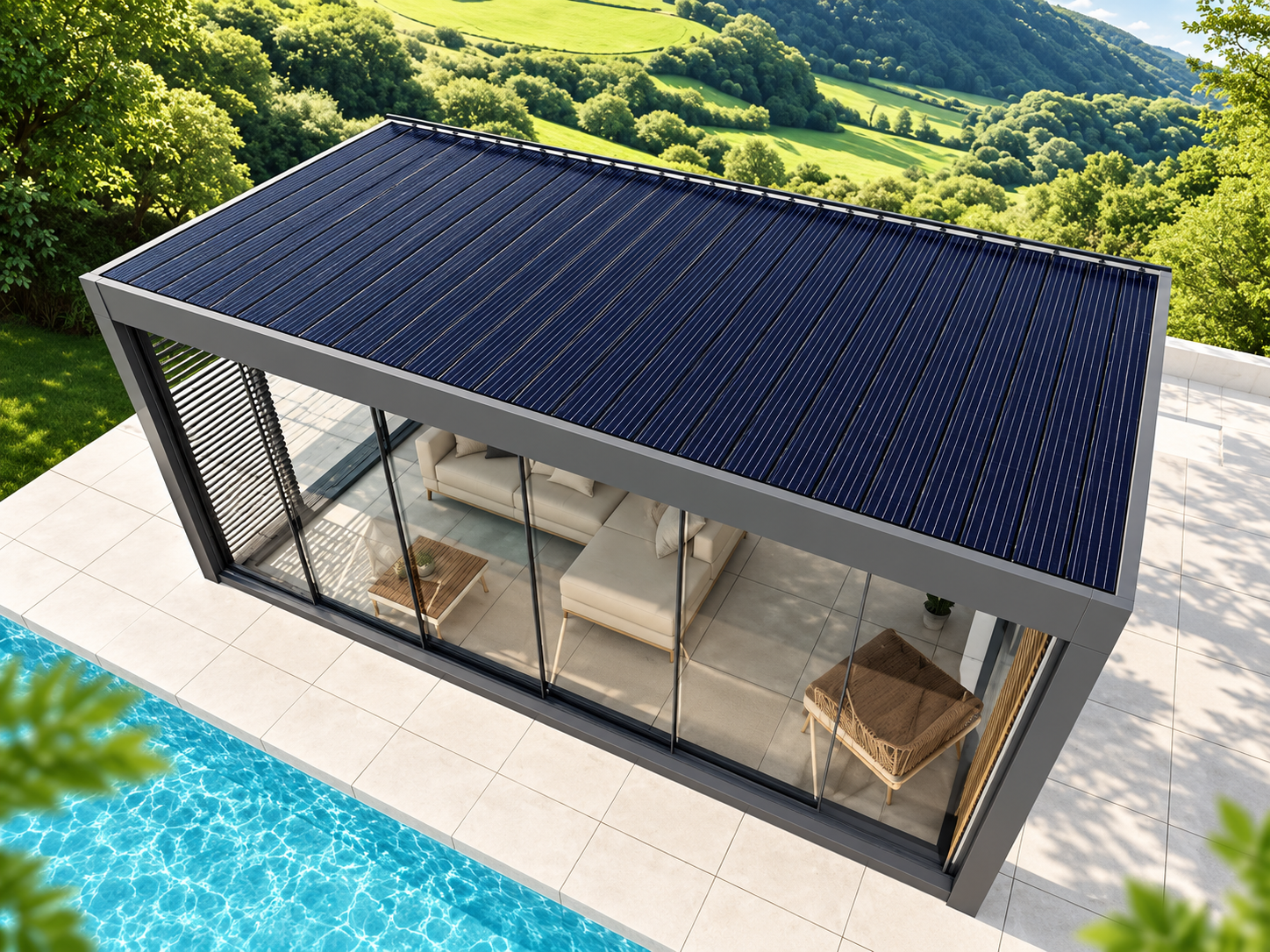
Each slim PV strip is fitted to a roof louver. Tilt the blades to tune the balance of shade and daylight; open them when you want more sky, light and air moving through the space.
Strip-shaped solar panels follow the louver layout rather than sitting as a separate fixed roof above it.
The louver roof remains adjustable, allowing you to change the angle for shade, daylight and ventilation.
Open the louvers to create a more open patio feel; the actual light and airflow depend on blade position and site conditions.
Choose a solar pergola if you want integrated PV strips and a louver roof that can still adjust. For a standard motorized louvered pergola without solar integration, compare our louvered pergola page. For a permanent roof without panels, see the fixed-roof options.
Include the site location, approximate dimensions, photos and panel make or size if you have chosen one. Any drawings or local structural requirements are useful too.
Production usually takes about 35 days after the specification is confirmed. Shipping time depends on the destination. Online installation guidance is free; on-site installation can be arranged for an additional fee.
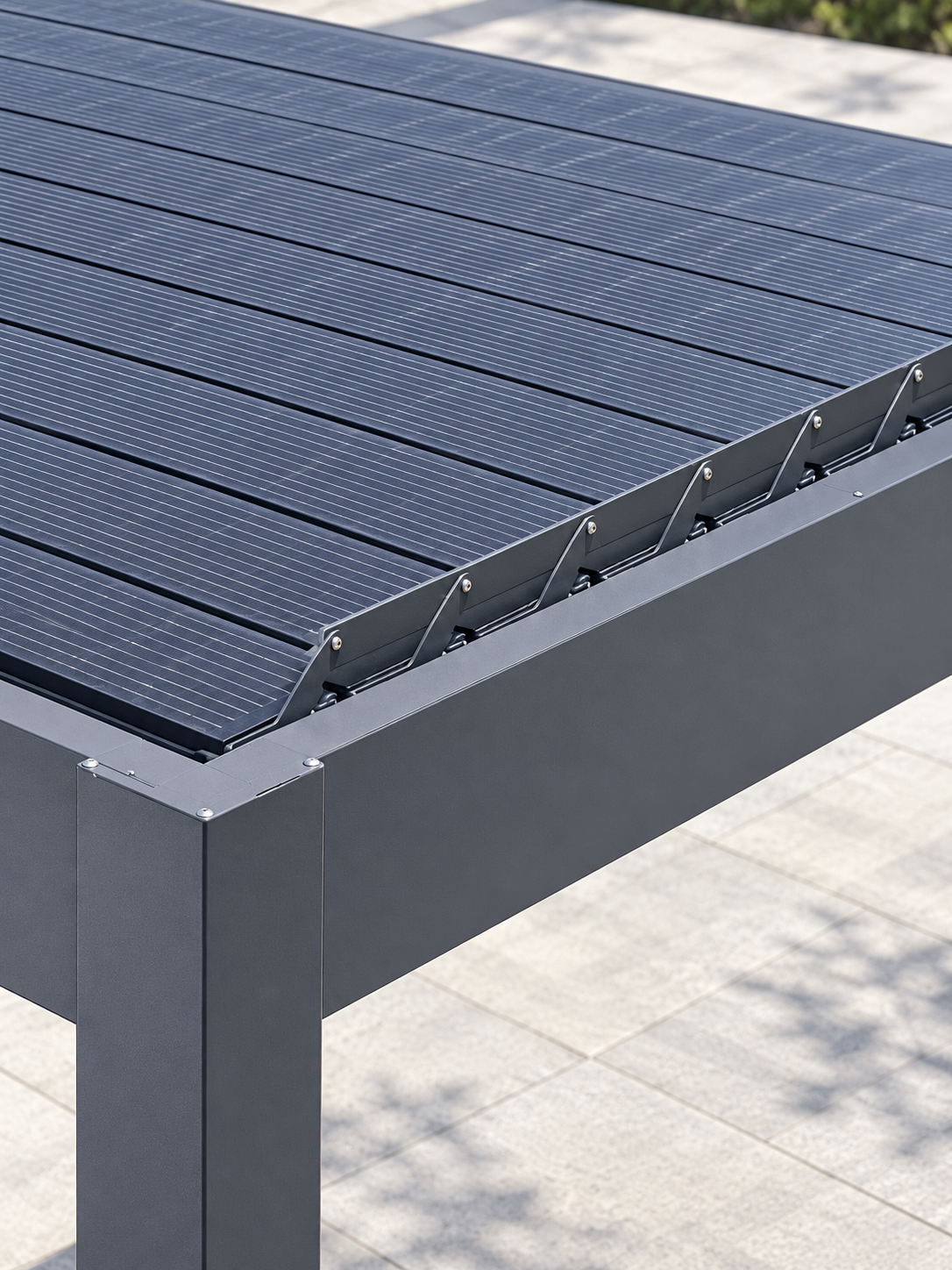
The photovoltaic strip is built into the louver blade, so the solar surface follows the roof as the blades tilt. This keeps the system focused on both electricity generation and the adjustable feel of a louvered patio cover.
Blade movement, wiring paths, panel spacing, drainage and maintenance access should be reviewed together for the final configuration.
2 kW and 5 kW configurations are available as starting points. Other system sizes can be customized to the pergola layout and project requirements.
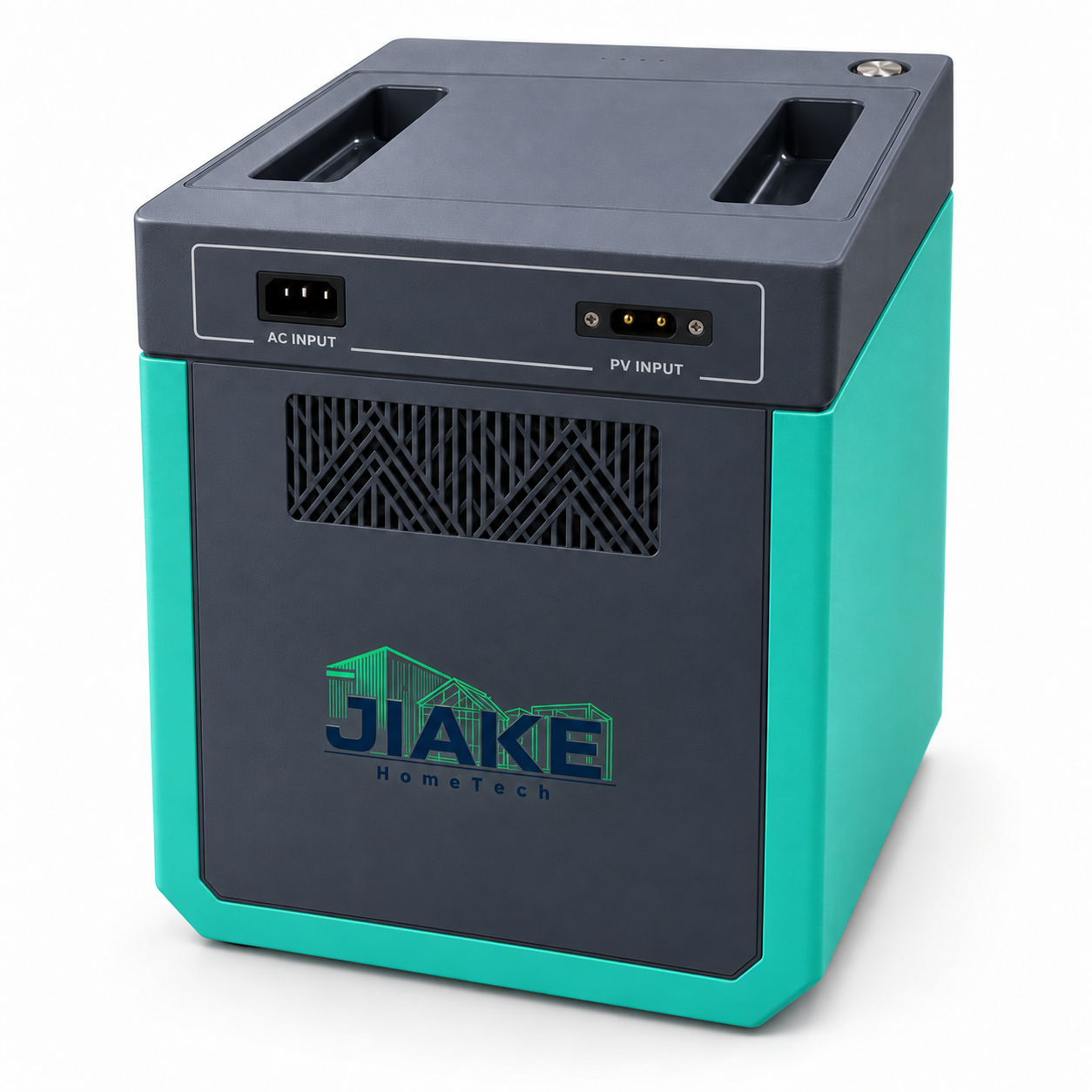
A compact starting configuration for a solar pergola project. Final panel count, inverter model and output depend on the approved design.

A larger configuration for projects with a greater generation target. Confirm the roof dimensions, electrical equipment and local connection requirements.
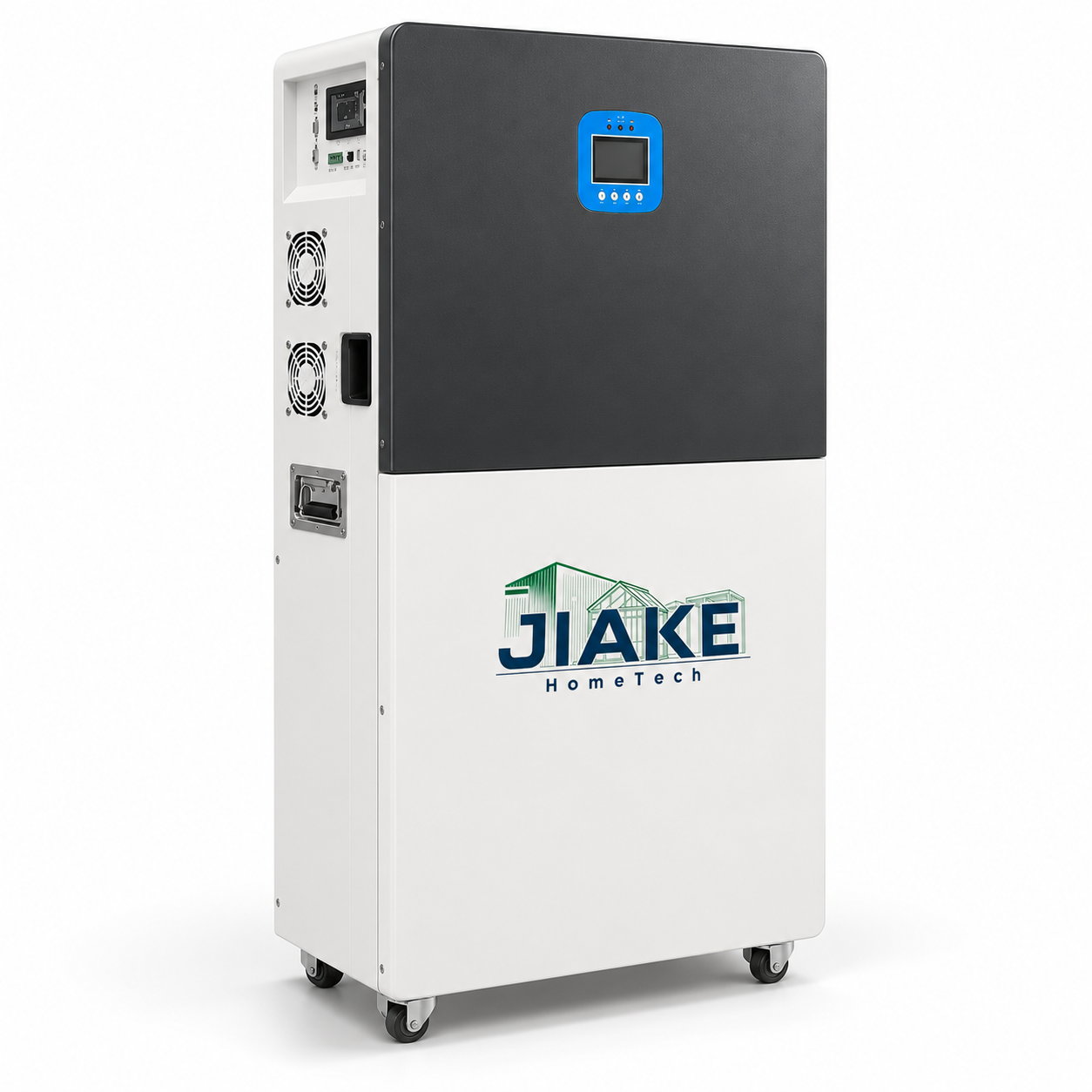
Pair the system with a compatible inverter and battery to store generated electricity for use after sunset.
With a compatible, professionally designed inverter and storage system, solar power may also be connected to household circuits, subject to local electrical rules and approvals. Battery capacity (kWh), inverter output (kW), backup functions and household connection scope must be confirmed for the selected equipment.
Think of the two ratings this way: 5.4 kWh is the stored energy that affects runtime; 5,000 W is the inverter output rating that limits how much load can run at once.
The examples below estimate one appliance running by itself. They use about 4.4 kWh of AC electricity after allowing for battery reserve and inverter conversion losses.
Illustrative estimates only: actual runtime varies with usable battery capacity, inverter efficiency, appliance power draw, cycling, temperature and battery condition. Appliances are shown individually, not all running together. Combined loads must stay within the inverter's rated output, and motor start-up surges may require extra headroom. A 5.4 kWh battery does not guarantee these runtimes.
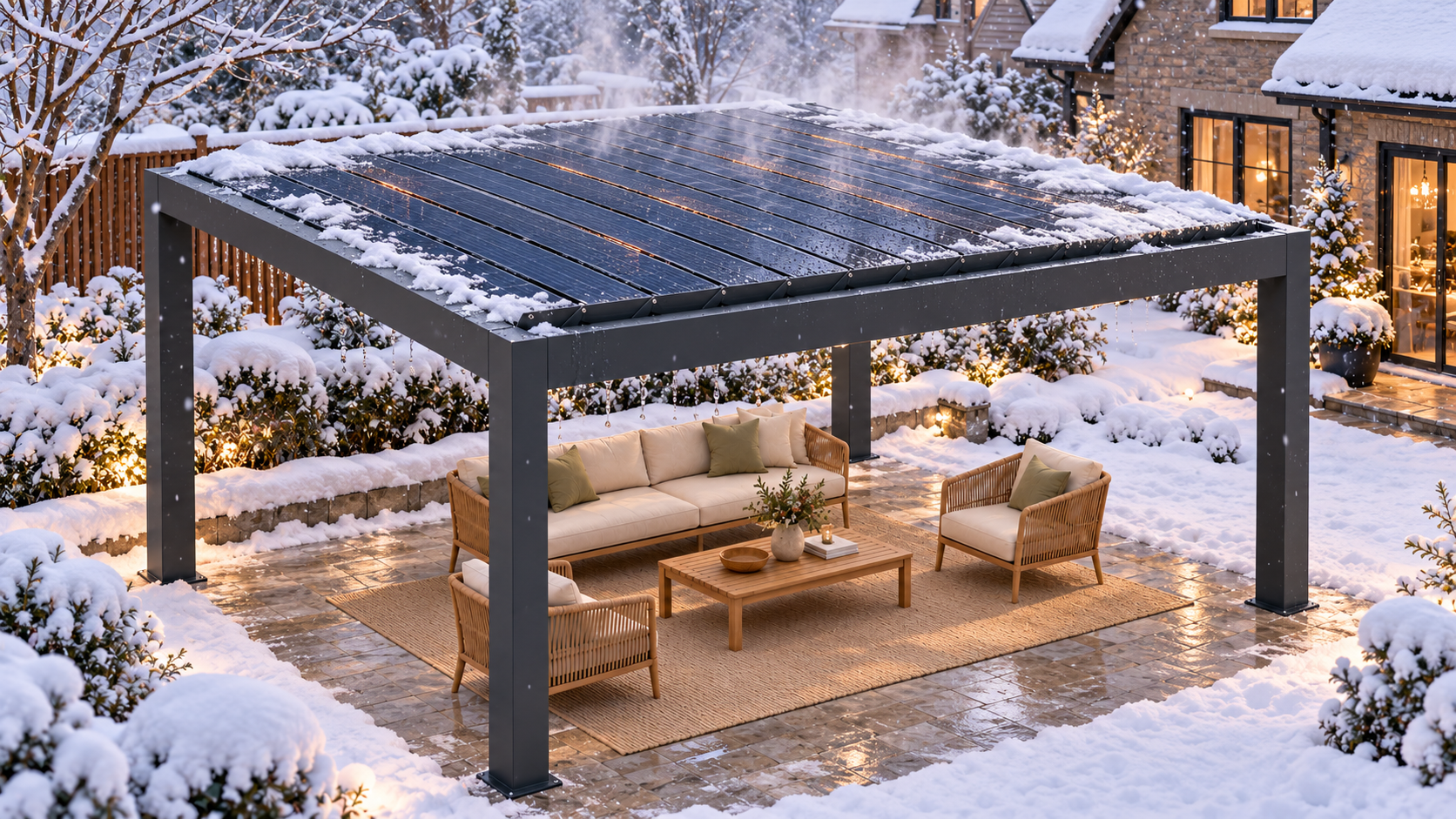
The integrated solar louver blades can provide heat to help melt snow from the roof in winter, making the pergola more practical in regions with regular snowfall.
The snow-melt effect depends on temperature, snowfall, drainage and the final system configuration. It does not replace structural snow-load design.
A clear project brief helps the pergola, panels and installation requirements get reviewed as one system.
Share the installation location, roof direction, surrounding shade and the way you plan to use the patio.
Provide panel dimensions, quantity and any mounting or access requirements from your solar supplier.
Include approximate spans, attachment conditions, drainage preferences and the proposed electrical connection point.
See the strip-shaped photovoltaic material up close, how it sits within the louver blades, and the finished solar pergola in motion.
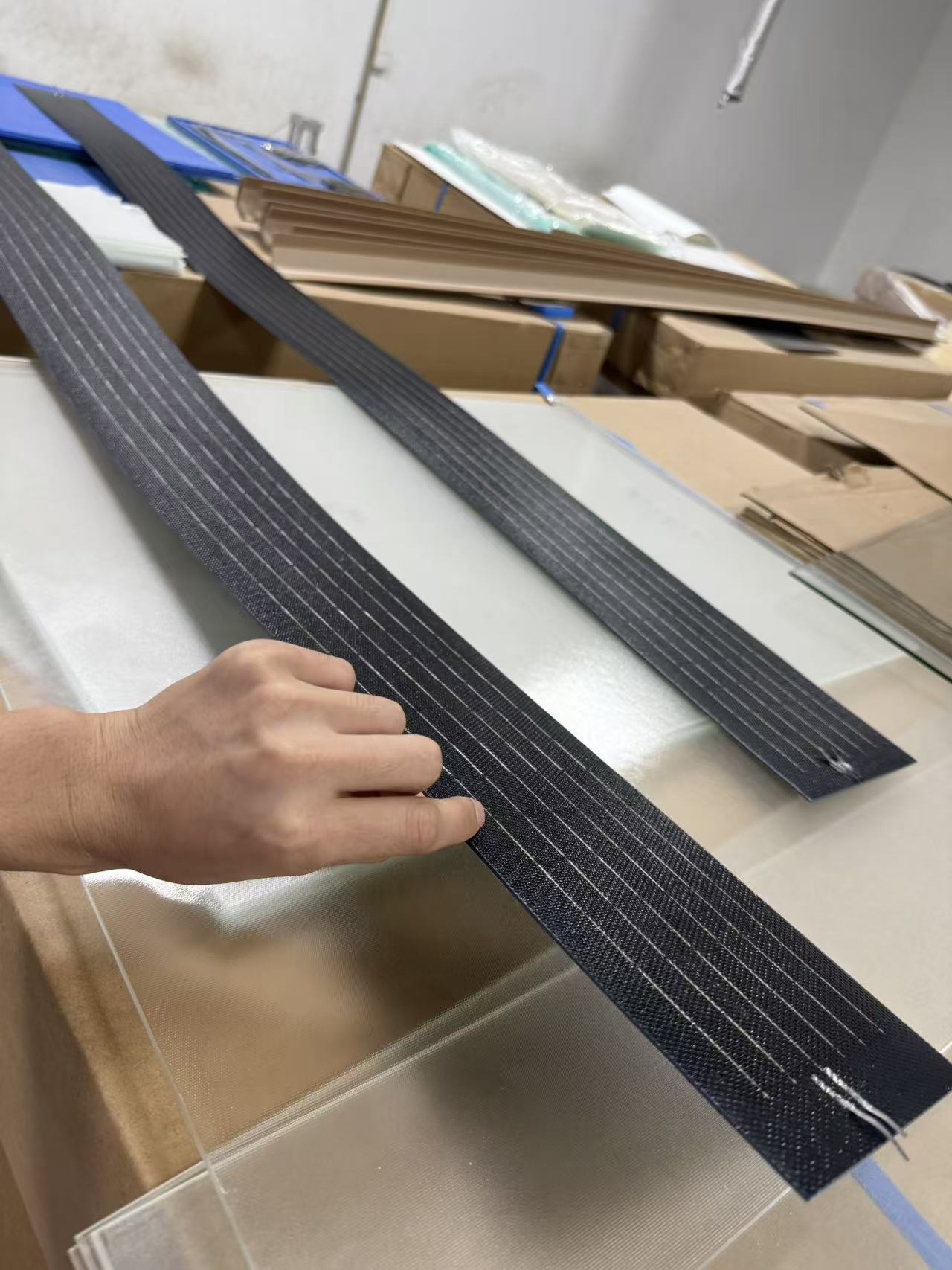
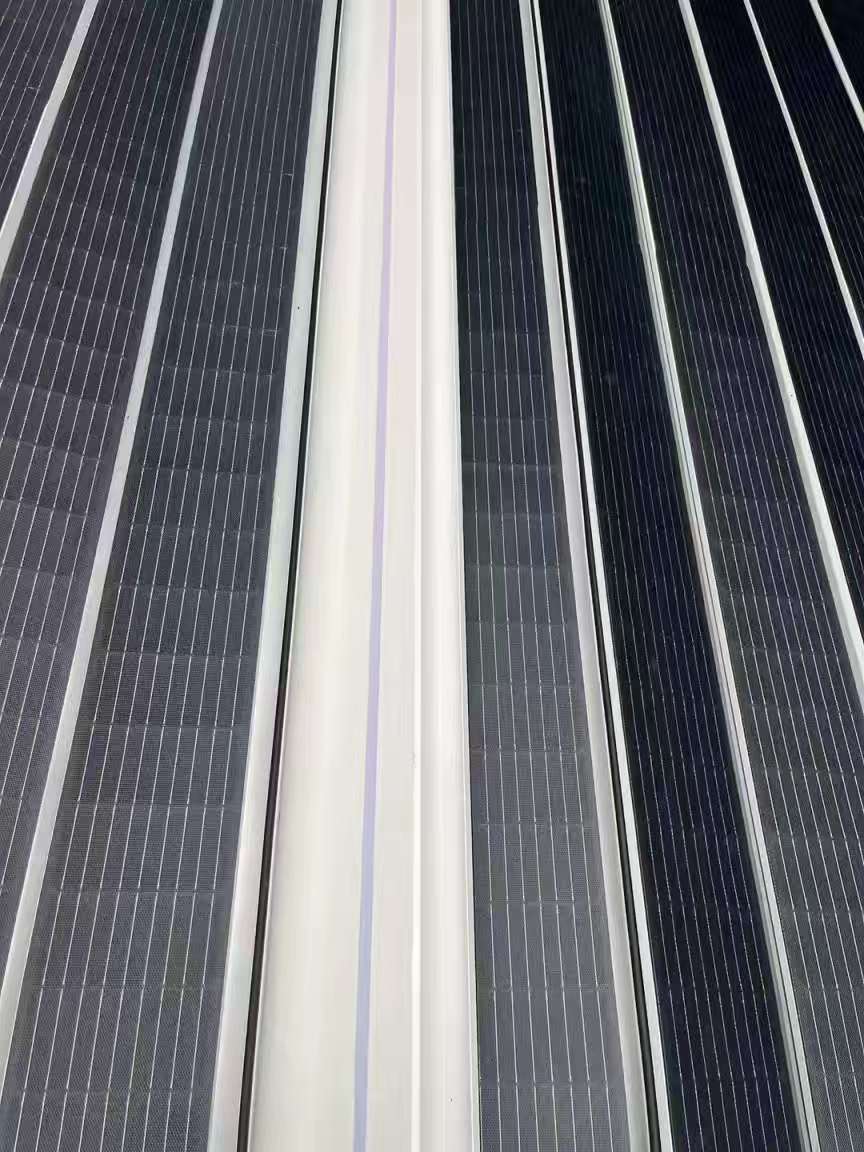
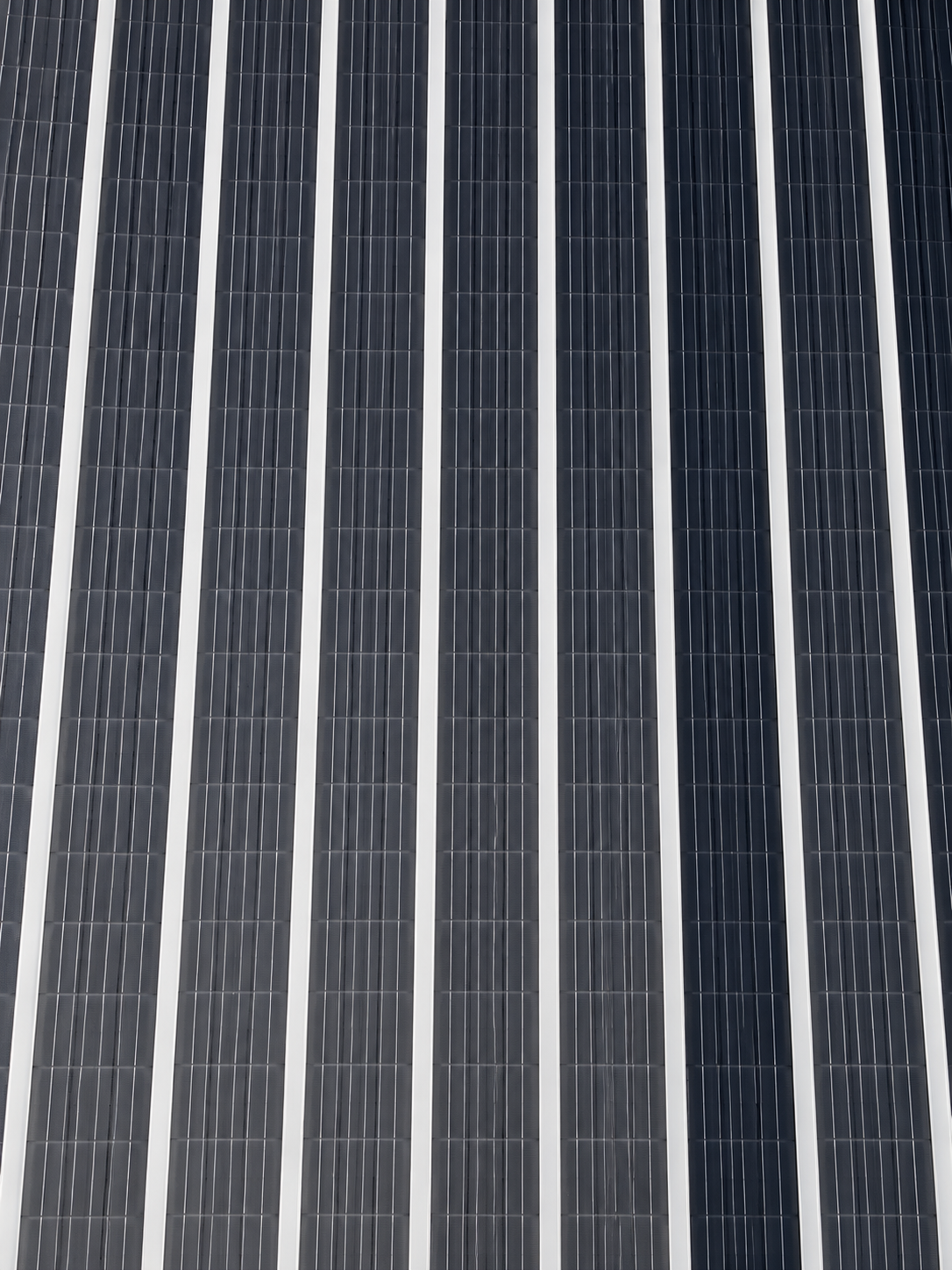
Solar louver details and operation.
Solar pergola product overview.
Every solar pergola project depends on its site, panel selection and local installation requirements.
A solar pergola is an outdoor structure planned to provide a covered patio area while supporting solar panels on its roof. It is also sometimes described as a pergola with solar panels or a solar patio cover.
Yes. The slim PV strips are fitted to the adjustable louver blades, so the louvers can still tilt and open. The amount of daylight, shade and airflow changes with the blade angle and site conditions.
A compatible inverter and battery storage system can be configured to store generated electricity for later use, including after sunset. Storage capacity, usable energy and backup functions depend on the selected equipment and system design.
Household integration may be possible with compatible electrical equipment and a qualified installation. The final setup must follow local electrical codes, utility requirements and any required approvals.
A heating function can be specified to assist with melting snow on the roof blades. Results depend on the heating configuration, weather, snow conditions and drainage; structural snow-load design is still required.
2 kW and 5 kW are starting configurations, and other sizes can be customized. These are system power ratings, not battery storage capacities; the final output and storage specification should be confirmed in the project design.
Share the site location, approximate dimensions, roof direction, panel model or size, quantity, photos and any local wind or snow requirements you already know.
Send the dimensions, location and panel details. We’ll check the roof layout and come back with the questions needed for a quotation.
Request a Preliminary Plan